The Interplay Between Customer Support Responses and Payment Method Efficiency in Austrian Digital Gaming Environments
Ellis Hayes · Oct 4, 2026
The Interplay Between Customer Support Responses and Payment Method Efficiency in Austrian Digital Gaming Environments
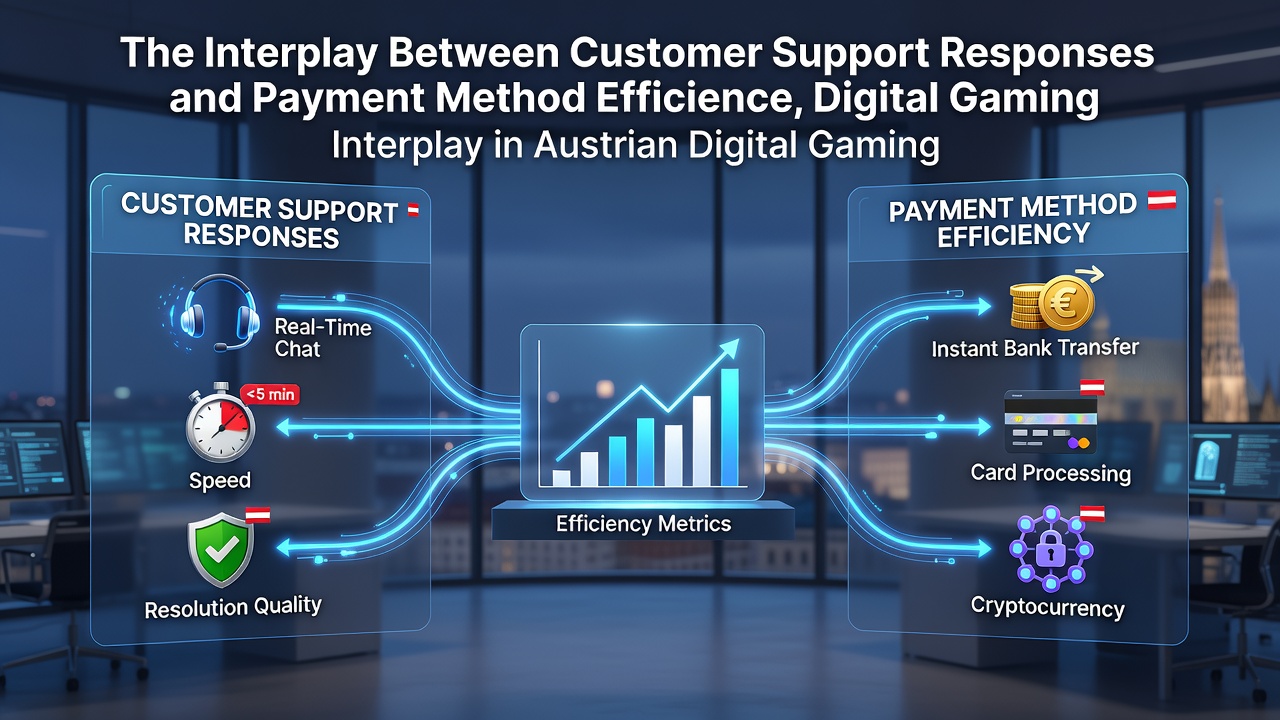
Digital gaming platforms operating in Austria rely on coordinated systems where customer support response times directly influence how quickly players complete transactions through various payment channels, and data collected through 2026 highlights measurable patterns across bank transfers, e-wallets, and card-based options. Observers note that when support teams resolve queries within minutes rather than hours, transaction completion rates for certain methods increase because users receive immediate guidance on verification steps or error codes that often stall processing.
Payment Method Characteristics in the Austrian Context
Bank transfers remain common in Austria due to established SEPA infrastructure, yet they typically require longer verification windows compared with instant e-wallet options, and support staff frequently assist users by confirming IBAN details or explaining hold periods that can extend from one to three business days. E-wallets such as those tied to major providers process deposits almost immediately while withdrawals sometimes trigger additional security checks, creating situations where rapid support intervention reduces abandonment rates according to platform metrics reported in October 2026. Card payments through Visa or Mastercard networks show intermediate speeds, with support interactions often centered on 3D Secure authentication failures that, when addressed promptly, allow transactions to finalize without repeated attempts.
Support Response Metrics and Their Measured Effects
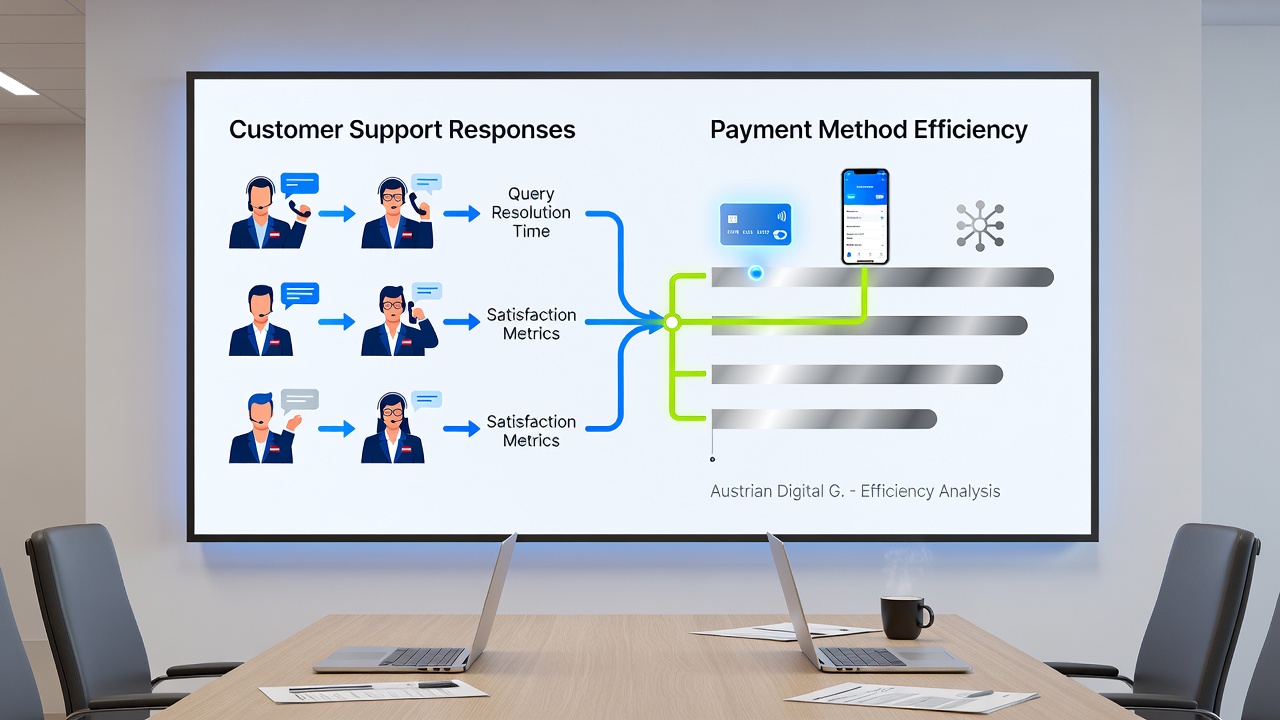
Industry reports compiled by Austrian operators indicate that average first-response times under five minutes correlate with higher success rates for e-wallet withdrawals, whereas delays beyond fifteen minutes coincide wth increased user follow-up contacts and occasional transaction reversals. Researchers at European institutions tracking payment service efficiency have documented similar outcomes across EU markets, where integrated chat systems that route payment-specific questions to specialized agents shorten resolution cycles compared with general queues. Data from October 2026 shows platforms employing AI-assisted triage for common issues like declined authorizations achieve faster handoffs to human agents, thereby maintaining momentum through the payment flow.
One platform analysis revealed that users encountering support for card verification problems completed transactions 40 percent more often when agents supplied step-by-step instructions within the initial exchange, whereas generic replies extended the overall timeline and prompted users to switch methods entirely. These patterns emerge because payment efficiency depends not only on backend processing speeds but also on the clarity and timeliness of human guidance during friction points.
Regulatory Framework Shaping Interactions
Austrian digital gaming falls under EU payment services directives and national licensing requirements that mandate transparent handling of funds, which in turn places expectations on support teams to provide accurate information about processing timelines without creating compliance risks. The European Commission documentation on payment services outlines standards that operators must meet, and these standards indirectly influence how support personnel communicate details about delayed withdrawals or failed deposits. Platforms that train agents on both regulatory language and technical payment troubleshooting report fewer escalations to supervisory authorities, keeping efficiency metrics stable.
Additional evidence comes from cross-regional studies, including work by the Australian Institute of Criminology examining technology-assisted gambling transactions, which found that clear support protocols reduce user frustration during payment stages and support continued platform engagement. In Austria this dynamic plays out through localized adaptations of the same principles, where language-specific assistance and time-zone aligned staffing contribute to measurable differences in transaction throughput.
Case Examples from Platform Operations
Take one operator that implemented dedicated payment support shifts in early 2026, after which average e-wallet payout times dropped from 48 hours to under 24 hours in cases involving verification queries, because agents could immediately flag and resolve KYC mismatches. Another instance involved a platform that logged support interactions tied to bank transfer delays, revealing that proactive messages about weekend processing cutoffs prevented users from initiating transactions destined to stall. These operational adjustments demonstrate how response quality and speed feed directly into the perceived and actual efficiency of each payment method.
Observers tracking Austrian market trends through October 2026 note that platforms combining automated status updates with live agent availability achieve the strongest alignment between support performance and transaction completion, particularly for methods requiring manual review such as larger withdrawals. Patterns show that when support response quality improves, users remain with their original payment choice instead of abandoning or switching, which preserves the efficiency advantages built into faster channels like e-wallets.
Conclusion
The connection between customer support responsiveness and payment method efficiency in Austrian digital gaming environments rests on documented operational data rather than isolated incidents, with faster, targeted assistance consistently linked to higher completion rates across bank transfers, e-wallets, and cards. Regulatory expectations and platform-level metrics continue to shape these interactions, while examples from 2026 illustrate practical outcomes when support systems integrate smoothly with transaction workflows. Continued monitoring of these variables provides operators and observers with concrete indicators of how service elements influence overall payment performance in this market.